Showing posts with label Home Interior Decorating. Show all posts
Showing posts with label Home Interior Decorating. Show all posts
Tuesday, 30 July 2013

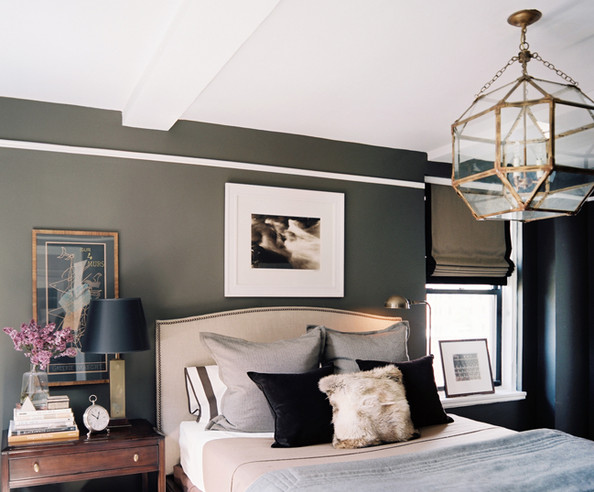
How to Design a Neutral Room That Isn't Boring
Beige is a bad word in interior design circles, a shortcut to describe a room that�s one-dimensional, dull, unimaginative, and not a lot of fun. But there is nothing wrong with beige, white, gray, brown, or any other neutral as the basis for designing a room. Assembled with care and finesse, a neutral room can create a serene but richly textured background for a colorful life. Here are our top tips for designing a neutral space that isn�t boring.
 Remember Your Geometry
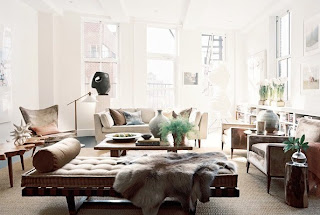
When designing a neutral room, make a conscious effort to incorporate as many different shapes as possible. Mix the straight lines of square picture frames and rectangular tables with an octagonal mirror, an oval rug, a round light and more organic shapes to create a graphic look that won�t overpower due to its neutral base. Painting flea market finds from various eras in shades of white will neutralize their differences, but make sure you look for a variety of shapes to keep the ensemble interesting.
Let There Be More Than Overhead Lighting
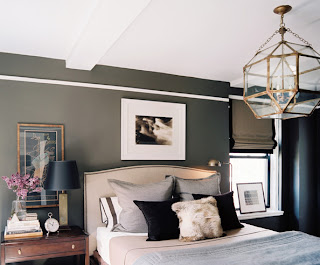
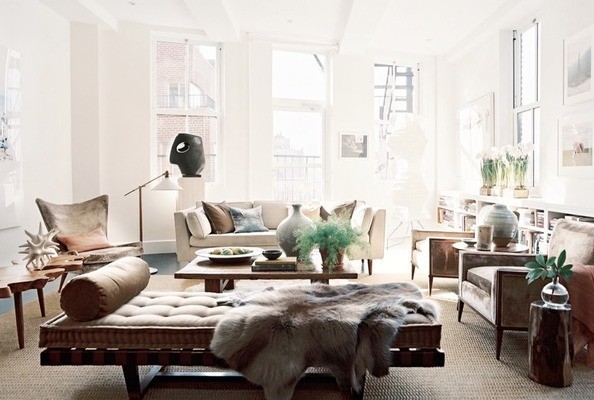
When designing a neutral room, make a conscious effort to incorporate as many different shapes as possible. Mix the straight lines of square picture frames and rectangular tables with an octagonal mirror, an oval rug, a round light and more organic shapes to create a graphic look that won�t overpower due to its neutral base. Painting flea market finds from various eras in shades of white will neutralize their differences, but make sure you look for a variety of shapes to keep the ensemble interesting.
Let There Be More Than Overhead Lighting
Monday, 29 July 2013
Traditional country bedroom

How To Remove Paint From Ceramic Bathroom Tiles?
Ceramic bathroom tiles are porous and withstand even the harsh chemicals. Since they come in different finishes, there are lot of chances for cracks or scratches. You can use commercial paint removers on the hard glaze ceramic tiles, while the home-made solutions are enough to remove paint from the residential tiles. You need to use chemical paint removers, if the entire tile surface has paint, which can speed up the process. Try to test the new cleaners in a small area.
The following steps will help you to remove the paint from the ceramic bathroom tiles easily:
1. First you need to wipe the tile surface and clean it thoroughly
2. Allow them to dry for some time
3. Apply the paint remover on clean cloth and polish on the small area first, to check whether they are causing any damages
4. If it is removing the paint well, without causing any damage to the tile, then use it all over the space
5. Read the instructions on the cover before you start the process of removal
6. Rinse a soft cloth in warm water and scrub the tile to remove the excess paint
If you find any difficulties following these steps then you can switch to natural and home-made paint removers available at affordable price.
Mix the equal amount of water and plain vinegar to get a natural paint remover. You can also boil the vinegar and use it under high pressure to remove the paint. Mix the solution in clean cloth and apply gently on the paint to test. The boiled vinegar will loosen the paint and it will start falling. Now scrub the paint from the tile with a soft bristled brush. Complete the entire work in the same process. Make sure you reheat the vinegar often, only then it can take away the paints. Rinse a clean cloth in the warm water and wash away the debris. Allow them to dry for a day if you are planning to repaint
Let me suggest you few tips to change the entire ambience with the ceramic bathroom tiles, by repainting them:
1. Once you have decided to re-paint on these tiles, apply the clear polyurethane to protect from tough usage.
2. They also help to keep the surface from scratches and cracks
3. You can also replace the tiles if they are not in good condition
These tiles are the best and brilliant option for your bathroom; try to match the fixtures and accessories according to the tile colour and enjoy the fresh new surroundings.
The following steps will help you to remove the paint from the ceramic bathroom tiles easily:
1. First you need to wipe the tile surface and clean it thoroughly
2. Allow them to dry for some time
3. Apply the paint remover on clean cloth and polish on the small area first, to check whether they are causing any damages
4. If it is removing the paint well, without causing any damage to the tile, then use it all over the space
5. Read the instructions on the cover before you start the process of removal
6. Rinse a soft cloth in warm water and scrub the tile to remove the excess paint
If you find any difficulties following these steps then you can switch to natural and home-made paint removers available at affordable price.
Mix the equal amount of water and plain vinegar to get a natural paint remover. You can also boil the vinegar and use it under high pressure to remove the paint. Mix the solution in clean cloth and apply gently on the paint to test. The boiled vinegar will loosen the paint and it will start falling. Now scrub the paint from the tile with a soft bristled brush. Complete the entire work in the same process. Make sure you reheat the vinegar often, only then it can take away the paints. Rinse a clean cloth in the warm water and wash away the debris. Allow them to dry for a day if you are planning to repaint
Let me suggest you few tips to change the entire ambience with the ceramic bathroom tiles, by repainting them:
1. Once you have decided to re-paint on these tiles, apply the clear polyurethane to protect from tough usage.
2. They also help to keep the surface from scratches and cracks
3. You can also replace the tiles if they are not in good condition
These tiles are the best and brilliant option for your bathroom; try to match the fixtures and accessories according to the tile colour and enjoy the fresh new surroundings.
Willing to read more about tiles? I recommend Ceramic Bathroom Tiles
Article Source: http://EzineArticles.com/?expert=Mark_MA_Anderson Saturday, 27 July 2013

Modern Interior Decorating
Do you like redecorating your room so it looks inviting as well as relaxing? Do you want to make things more accessible and your room layout more functional? If so, you probably love interior decorating.
Interior decorating encompasses a wide area of interests: the paint on the walls and on the other surfaces of your room, wallpaper, carpet, tiles, light fixtures, furniture, and even paintings and sculptures.
It is not easy to define exactly what modern interior decorating is since it can actually take on many forms. It seems like there are new design themes and styles coming out every day. In fact, the sky's the limit when it comes to modern-day decorating. Identical designs are no longer the norm. Nowadays, your personality is reflected in your room's interiors.
To create a new look and feel to your room, you may want to try this more up-to-date form of interior decorating. Although there are different classifications to modern design, they can be used as a guide to how you can go about redecorating your place.
You can choose to go with an eclectic style of designing. This is a more common style of modern decoration. As its name implies, eclectic decorating makes use of a combination of different styles to give rise to a completely unique look. Usually, interior decorators just incorporate designs that appeal to them personally, positioning furniture and d�cor to their liking. You could do the same for your room.
Another decorating style is art deco. Although art deco is classified under modern designs, this style was actually inspired by the 1920s and 1930s. In this style, a lots of lines are used in angular, but elegant, ways. Colors are bright and vibrant.
You may want to go whimsical if you like bright pastel colors. As suggested by the name, this style has no set pattern. A whimsical design applied to a room often gives it a standout and fanciful look and feel.
Interior decorating encompasses a wide area of interests: the paint on the walls and on the other surfaces of your room, wallpaper, carpet, tiles, light fixtures, furniture, and even paintings and sculptures.
It is not easy to define exactly what modern interior decorating is since it can actually take on many forms. It seems like there are new design themes and styles coming out every day. In fact, the sky's the limit when it comes to modern-day decorating. Identical designs are no longer the norm. Nowadays, your personality is reflected in your room's interiors.
To create a new look and feel to your room, you may want to try this more up-to-date form of interior decorating. Although there are different classifications to modern design, they can be used as a guide to how you can go about redecorating your place.
You can choose to go with an eclectic style of designing. This is a more common style of modern decoration. As its name implies, eclectic decorating makes use of a combination of different styles to give rise to a completely unique look. Usually, interior decorators just incorporate designs that appeal to them personally, positioning furniture and d�cor to their liking. You could do the same for your room.
Another decorating style is art deco. Although art deco is classified under modern designs, this style was actually inspired by the 1920s and 1930s. In this style, a lots of lines are used in angular, but elegant, ways. Colors are bright and vibrant.
You may want to go whimsical if you like bright pastel colors. As suggested by the name, this style has no set pattern. A whimsical design applied to a room often gives it a standout and fanciful look and feel.
Interior Decorating provides detailed information on Interior Decorating, Interior Decorating Ideas, Home Interior Decorating, Office Interior Decorating and more. Interior Decorating is affiliated with Home Interior Designs [http://www.i-InteriorDesign.com].
Article Source: http://EzineArticles.com/?expert=Max_Bellamy Domed Terrarium? - Home Interior Decorating
Domed Terrarium?

Bring the outdoors in with this domed terrarium. Not only are terrariums low-maintenance, the round shape of this one also makes for a sculptural accessory for the living room. For starters, try filling it with a few mini cacti, which are attractive and easy to manage.
Domed Terrarium, $48, from Terrain

Bring the outdoors in with this domed terrarium. Not only are terrariums low-maintenance, the round shape of this one also makes for a sculptural accessory for the living room. For starters, try filling it with a few mini cacti, which are attractive and easy to manage.
Domed Terrarium, $48, from Terrain
Floral and checks country bedroom


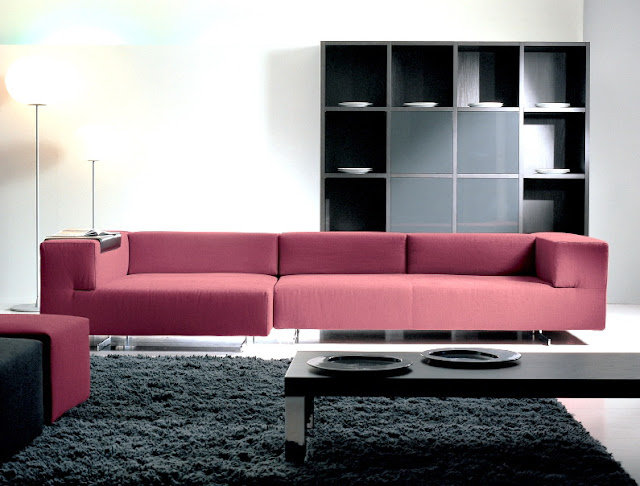
Modern Living Room Design
A renovation of an ornate, parlor level brownstone apartment on the Promenade in Brooklyn Heights with views to the Manhattan skyline. The space was reconfigured to create long views through the apartment around a sculptural �core�, its modern detailing and materials acting in counterpoint to the grandeur of the original detailing.

Tuesday, 23 July 2013
Choosing An Interior Decorator
Some people feel intimidated at the thought of hiring an interior decorator. It used to be only the wealthy employed decorators. With more and more people spending time at home after a long day of work, they want their house to be a haven to come home to. Unfortunately, lengthy commutes and long work hours make it virtually impossible for homeowners, even if they are handy, to start and complete a job within a reasonable amount of time. Maybe you're just not sure how to pull it all together.
That's when you want to consider the services of an interior decorator. An interior decorator will do the research and legwork for you. You do have to do a little homework, though. Before hiring an interior decorator, decide what you're expecting from the decorator regarding your project and what do you want the decorator to do for you.
Keep in mind the following for when you meet with a decorator for your consultation:
1. Your budget. This is very important because it will dictate what resources are available to the decorator to meet your budget requirements. Resources are adjusted; the interior decorator's fee is not.
2. Your style. If you don't know your style, use decorating books, magazines and home catalogs that give an indication of the things you like. It may be candlesticks from one picture, a rug from another picture, the clock in another, and so on. This will give the decorator a visual of what you are looking for in your project.
3. Color. When you hire an interior decorator you know that you will be getting color. The question becomes, what color. Be prepared to know what colors you like and dislike; this goes for the other members of your family.
4. Know what pieces and accessories you are keeping, and which you are ready to part with. If you have an heirloom of Aunt Martha's that must work with the decor, you should let the interior decorator know that.
5. The Room. Be prepared to let the decorator know what the project room is going to be used for, in the event it is not apparently obvious, like a kitchen. Who will be using this room? What will be the function of the room?
6. Pets. If you have pets and they are not in evidence at the time of your consultation, let the decorator know that you have pets. This will help in determining the type of fabrics used, especially if your pets normally have free range of your home.
7. Pictures. As previously stated, pictures are always good to have on hand to reflect a style you like, or general furniture, fabric or color preferences.
8. DIY. If you want to try and cut down on the expense of some of the decorating, you can indicate to the interior decorator this preference. For example, if you like to paint, and do it well, there should be no reason you can't paint a project room yourself. You'll also save yourself several hundred dollars.
1. The ability to listen. When the decorator comes to your home for the consultation, they should listen attentively and do a walk through of the project room.
2. The ability to make the right product selections for your project.
3. Creative ideas and solutions for your project.
4. Helping to create your color and design scheme by showing you fabric and paint samples, and suggesting surface solutions such as flooring.
5. The attitude that this is your home and should reflect the style and personalities of the family living there, not the decorator's.
6. A willingness to come out to your home to meet with you.
7. Suggestions as to how to improve a home's function by applying design principles of color, texture, balance, etc.
FEES
Fees vary depending on the interior decorator; whether it's a large or small firm; and whether it's a residential or high-end residential decorator.
Some of the basics are:
* Hourly - this can vary from $35.00 to $250.00 per hour. Sometimes interior decorators will provide a free one-hour consultation, but after the first hour charges apply. That is why it is important for you to do your homework. Use your time with the decorator wisely.
* Fixed - also known as Flat Fee, and may include a cap on the hours that are included within that fee.
* Percentage - also referred to as Cost Plus. This is calculated between 15-30% above cost, and does not include delivery or sales tax.
* Retail - is exactly what it says. It is the same retail price you would pay, as some stores do not discount to the trade.
* A Combination of any of the above.
Working with an interior decorator can be a pleasant, rewarding and satisfying experience. If you do your homework beforehand, and use the consultation time wisely, this could be a headache free experience. You may enjoy it so much that who knows, maybe you will do something with that guest room before your mother comes to visit.
That's when you want to consider the services of an interior decorator. An interior decorator will do the research and legwork for you. You do have to do a little homework, though. Before hiring an interior decorator, decide what you're expecting from the decorator regarding your project and what do you want the decorator to do for you.
HOMEOWNER HOMEWORK
Keep in mind the following for when you meet with a decorator for your consultation:
1. Your budget. This is very important because it will dictate what resources are available to the decorator to meet your budget requirements. Resources are adjusted; the interior decorator's fee is not.
2. Your style. If you don't know your style, use decorating books, magazines and home catalogs that give an indication of the things you like. It may be candlesticks from one picture, a rug from another picture, the clock in another, and so on. This will give the decorator a visual of what you are looking for in your project.
3. Color. When you hire an interior decorator you know that you will be getting color. The question becomes, what color. Be prepared to know what colors you like and dislike; this goes for the other members of your family.
4. Know what pieces and accessories you are keeping, and which you are ready to part with. If you have an heirloom of Aunt Martha's that must work with the decor, you should let the interior decorator know that.
5. The Room. Be prepared to let the decorator know what the project room is going to be used for, in the event it is not apparently obvious, like a kitchen. Who will be using this room? What will be the function of the room?
6. Pets. If you have pets and they are not in evidence at the time of your consultation, let the decorator know that you have pets. This will help in determining the type of fabrics used, especially if your pets normally have free range of your home.
7. Pictures. As previously stated, pictures are always good to have on hand to reflect a style you like, or general furniture, fabric or color preferences.
8. DIY. If you want to try and cut down on the expense of some of the decorating, you can indicate to the interior decorator this preference. For example, if you like to paint, and do it well, there should be no reason you can't paint a project room yourself. You'll also save yourself several hundred dollars.
WHAT TO EXPECT FROM YOUR INTERIOR DECORATOR
The interior decorator will bring to your project:1. The ability to listen. When the decorator comes to your home for the consultation, they should listen attentively and do a walk through of the project room.
2. The ability to make the right product selections for your project.
3. Creative ideas and solutions for your project.
4. Helping to create your color and design scheme by showing you fabric and paint samples, and suggesting surface solutions such as flooring.
5. The attitude that this is your home and should reflect the style and personalities of the family living there, not the decorator's.
6. A willingness to come out to your home to meet with you.
7. Suggestions as to how to improve a home's function by applying design principles of color, texture, balance, etc.
HIRING THE INTERIOR DECORATOR
If after your consultation with an interior decorator, you feel you have made a connection with this person, and trust them enough to make the right choices, you will enter into a contract signed by both you and the decorator. This not only protects both the homeowner and the decorator, but should set forth the project details.FEES
Fees vary depending on the interior decorator; whether it's a large or small firm; and whether it's a residential or high-end residential decorator.
Some of the basics are:
* Hourly - this can vary from $35.00 to $250.00 per hour. Sometimes interior decorators will provide a free one-hour consultation, but after the first hour charges apply. That is why it is important for you to do your homework. Use your time with the decorator wisely.
* Fixed - also known as Flat Fee, and may include a cap on the hours that are included within that fee.
* Percentage - also referred to as Cost Plus. This is calculated between 15-30% above cost, and does not include delivery or sales tax.
* Retail - is exactly what it says. It is the same retail price you would pay, as some stores do not discount to the trade.
* A Combination of any of the above.
Working with an interior decorator can be a pleasant, rewarding and satisfying experience. If you do your homework beforehand, and use the consultation time wisely, this could be a headache free experience. You may enjoy it so much that who knows, maybe you will do something with that guest room before your mother comes to visit.
Kathy Passarette is a Certified Interior Decorator and Affiliate member of the Interior Design Society. She is the owner of Creative Home Expressions located on Long Island, New York. You can contact Kathy through her website at [http://www.creativehomeexpressions.com].
Home Interior Design Modern Architecture Home Furniture Modern
Home Interior Design Modern Architecture Home Furniture Modern

Saturday, 20 July 2013
How Do Travertine Floor Tiles Differ From Porcelain Tiles
Travertine floor tiles are fashionable for the bathrooms, bedrooms and kitchens. You can use them for countertops to get a grand look. Travertine is natural stone and porcelain tiles are artificial. Porcelain has higher durability then travertine and the tiles quality is low. These are available in different finishes and this special property is not seen in any other tiling materials. Travertine is not suitable for the areas where there is heavy traffic and porcelain is a good choice for this. These are available in large sizes than the porcelain and you can also cut the size according to the need. Porcelain tiles are synthetic and sealed. They will absorb the stains easily if we do not polish the surface. They are less porous when compared to travertine and coated finishes decrease staining. They are resistant because of their high density and they take in less amount of moisture.
Travertine floor tiles are not suitable for some areas as they get stained easily. You can use them for moist areas by sealing them properly. Travertine is usually obtained from the quarry as limestone and they are then made available in different finishes like polished, tumbled, chiseled, filled and honed. You can get them according to the theme of the place and applications of usage. You get Porcelain by compressing clay with water and it is a form of ceramic. Glazed and unglazed finishes are familiar in these. They are not suitable for the moist areas. Hand-painted porcelain looks good for bathrooms, hallways and kitchens. Travertine does not need high maintenance than porcelain. When left unpolished they are prone to heat; you can use hot pad or trivets before keeping the hot objects on the surface.
You have to keep the travertine floors dry after the usage, as water on the surface for a long time will decrease the brightness of the tiles. Do not cut them directly, as they may produce scratches and damage the tiles. You have to use non-abrasive cleaners to clean the surface and window cleaner to remove hard stains. Travertine floor tiles are more expensive than porcelain tiles for their transportation and mining. The glazed finish of porcelain is also quite costly. Travertine needs stronger abrasives for installing them perfectly. Sealant application is also needed in twice the amount as they are porous which increases the cost. You have to seal them at least twice in a year. You should clean the tiles regularly and do not use acidic solutions on the surface. You can get them from the online dealers by getting some samples before ordering the tiles. Appropriate maintenance will increase the room appearance and you can get a fresh and hygienic look from the floors and walls.
Travertine floor tiles are not suitable for some areas as they get stained easily. You can use them for moist areas by sealing them properly. Travertine is usually obtained from the quarry as limestone and they are then made available in different finishes like polished, tumbled, chiseled, filled and honed. You can get them according to the theme of the place and applications of usage. You get Porcelain by compressing clay with water and it is a form of ceramic. Glazed and unglazed finishes are familiar in these. They are not suitable for the moist areas. Hand-painted porcelain looks good for bathrooms, hallways and kitchens. Travertine does not need high maintenance than porcelain. When left unpolished they are prone to heat; you can use hot pad or trivets before keeping the hot objects on the surface.
You have to keep the travertine floors dry after the usage, as water on the surface for a long time will decrease the brightness of the tiles. Do not cut them directly, as they may produce scratches and damage the tiles. You have to use non-abrasive cleaners to clean the surface and window cleaner to remove hard stains. Travertine floor tiles are more expensive than porcelain tiles for their transportation and mining. The glazed finish of porcelain is also quite costly. Travertine needs stronger abrasives for installing them perfectly. Sealant application is also needed in twice the amount as they are porous which increases the cost. You have to seal them at least twice in a year. You should clean the tiles regularly and do not use acidic solutions on the surface. You can get them from the online dealers by getting some samples before ordering the tiles. Appropriate maintenance will increase the room appearance and you can get a fresh and hygienic look from the floors and walls.
Willing to read more about tiles? I recommend Travertine Floor Tiles
Article Source: http://EzineArticles.com/?expert=Mark_MA_Anderson Wednesday, 17 July 2013

Monday, 8 July 2013

Subscribe to:
Posts (Atom)
